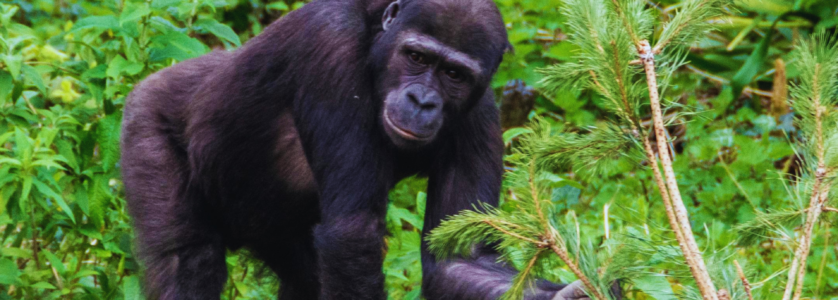
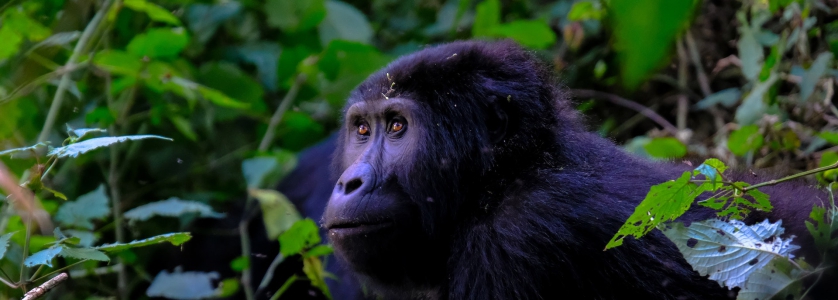
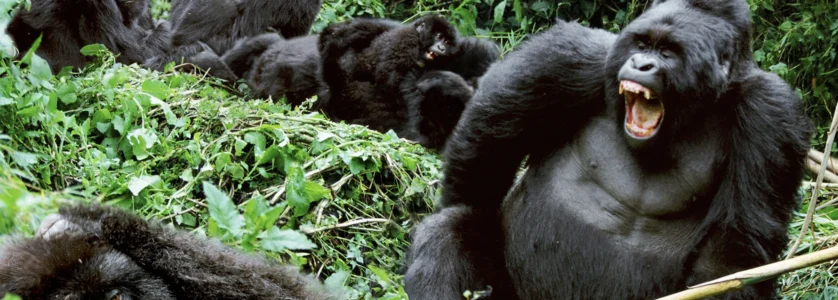
You see the price tag and hesitate. A permit for gorilla safaris Rwanda costs $1,500. Just across the border in Uganda, the exact same species of mountain gorilla commands an $800 entry fee. On paper, this looks like the easiest financial decision of your trip. You pocket the $700 difference and assume you just hacked the system.
You haven’t. You just stepped into the most common logistical trap in East African travel.
When you book a primate expedition based solely on the sticker price of the permit, you bleed capital through hidden logistical friction. That $700 “savings” evaporates the moment you factor in mandatory domestic bush flights, brutal 10-hour overland transits, and the cost of the extra hotel nights required to bridge the geographical gaps in Uganda.
We don’t deal in illusions; we deal in tactical travel economics. If you want to know whether the Rwandan premium delivers a tangibly superior luxury experience, and whether it actually costs more in the aggregate, you need a forensic audit of the investment. Here is the unvarnished truth about primate price arbitrage.
The Illusion of the $700 Discount
The gap between $1,500 and $800 is substantial. However, a permit does not exist in a vacuum. It is anchored to the geography of the host country.
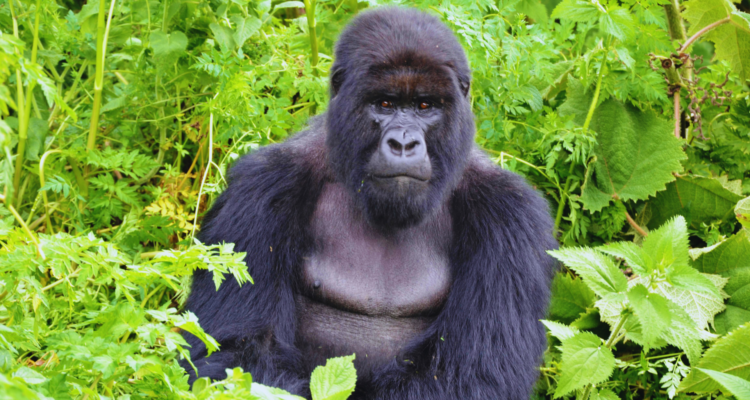
Gorilla safaris Rwanda operate with lethal efficiency. You land at Kigali International Airport (KGL), clear a modern customs facility, and step into a 4×4. Two and a half hours later, via impeccably paved roads, you are sipping single-malt scotch at your luxury lodge in Volcanoes National Park.
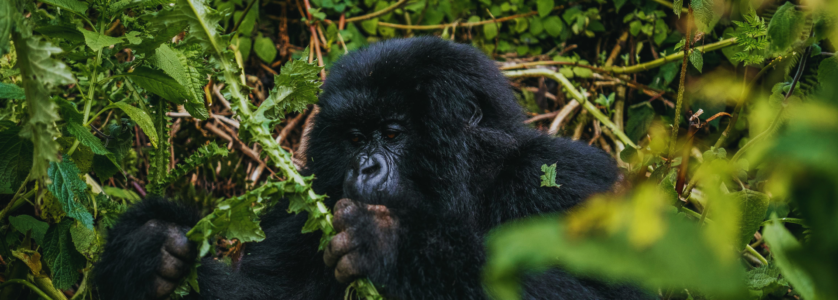
Uganda requires a fundamentally different time commitment. Bwindi Impenetrable Forest is geographically isolated. If you fly into Entebbe (EBB), you face a grueling 9-to-10-hour overland drive. To avoid losing two entire days of your vacation to a bumpy highway, luxury travelers are forced to purchase round-trip domestic bush flights.
Instantly, the arbitrage window closes.
Information Gain: The “Cost-Per-Hour-of-Contact” Audit
To understand true ROI, we use a metric called the Cost-Per-Hour-of-Contact. This calculates the total baseline spend required to execute a high-end, efficient safari, divided by the one hour you actually spend with the gorillas.
We analyzed a standard, compressed luxury itinerary (minimizing days off work) for both destinations.
The Financial Reality: Rwanda vs. Uganda (Fly-In)
| Expense Category | Rwanda (Volcanoes NP) | Uganda (Bwindi via Entebbe Fly-In) | The Financial Reality |
| Permit Price | $1,500 | $800 | Uganda looks $700 cheaper upfront. |
| Required Transit | $250 (Private 4×4, round trip) | $350 (Domestic Flight) + $150 (Transfers) | Rwanda’s infrastructure eliminates flight costs. |
| Minimum Required Nights | 2 Nights | 3 Nights | Uganda’s flight schedules force an extra night. |
| Lodging Offset ($500/nt) | $1,000 | $1,500 | The extra Ugandan night erases the permit savings. |
| Total Baseline Capital | $2,750 | $2,800 | The Rwandan premium is actually a baseline wash. |
Note: This matrix assumes a comparable luxury standard. The math clearly dictates that when time is factored as a hard cost, the Ugandan discount is a myth for the premium traveler.
The ROI of the Rwandan Premium
If the total capital outlay is roughly identical, what exactly does the Rwandan premium buy you? You aren’t paying for a better gorilla; you are paying for superior infrastructure, reduced physical degradation, and aggressive conservation reinvestment.
1. The Biomechanical Advantage
Bwindi is called “Impenetrable” for a reason. You are bushwhacking through dense, tangled vines on steep, muddy ravines. It is a grueling, unpredictable physical test. Volcanoes National Park is characterized by open bamboo forests. While the altitude is higher, the ground is generally clearer, allowing for a much cleaner, less chaotic hiking experience. For older travelers or those with joint concerns, this terrain difference is worth the $1,500 alone.
2. Portfolio-Grade Photography
If you are carrying $10,000 worth of camera gear, light is your currency. Bwindi’s dense canopy blocks out the sun, forcing you to shoot at high ISOs, resulting in grainy images. Rwanda’s bamboo forests allow dappled sunlight to reach the forest floor. The photographic yield on Rwanda gorilla tours is consistently superior simply due to the vegetation profile.
3. The Exclusivity Factor
Rwanda deliberately positions itself as a low-volume, high-yield destination. By pricing the permit at $1,500, the Rwanda Development Board (RDB) inherently filters the crowd. The lodges are fewer, the service is hyper-personalized, and the overall ecosystem feels remarkably exclusive. You are purchasing a frictionless environment.
The Strategic Exception: When Does Uganda Win?
We are objective strategists. There are two specific scenarios where Uganda’s $800 permit definitively wins the arbitrage battle:
- The “Kigali Fly-In” Hack: You land in Kigali, Rwanda, but immediately drive across the border into southern Uganda (Rushaga or Nkuringo). This takes roughly 4 hours. You leverage Rwanda’s airport but buy Uganda’s permit. You must factor in East African Tourist Visa costs and border delays, but the savings are real.
- The Habituation Experience: For $1,500 in Uganda, you can buy a “Gorilla Habituation” permit. This grants you four hours with the gorillas instead of one. If your primary goal is maximum contact time and you possess the physical endurance for a full-day jungle trek, Uganda offers unmatched duration ROI.
Frequently Asked Questions
No. While primates are the anchor, Rwanda has successfully revitalized Akagera National Park into a premier Big Five destination. Combining a gorilla trek in the volcanoes with a classic savanna safari in Akagera creates a highly efficient, dual-ecosystem itinerary without ever crossing a border.
Does the $1,500 permit include accommodation or transport?
No. The $1,500 fee paid to the RDB covers only park entry, the expert tracker team, armed rangers, and your one hour of contact with the gorillas. Lodging, transport, and porters are separate logistical line items.
Where does the Rwandan permit money actually go?
Rwanda operates one of the most transparent revenue-sharing models in Africa. A mandated 10% of all permit revenue is funneled directly back into the local communities surrounding the park to build schools, clinics, and infrastructure. This aligns the community’s economic success with the protection of the primates.
Can I negotiate the price of a gorilla permit?
Absolutely not. Permit prices are set by the national governments and are non-negotiable. Furthermore, during peak season (June through September), permits sell out months in advance. The challenge isn’t the price; it is securing the inventory.
 >
>