 >
> Do you know what the wildlife in Volcanoes National Park is? If not, then read more of this blog to discover all the fascinating animals in Volcanoes National Park!
Volcanoes National Park in northwestern Rwanda is one of the most popular Rwanda national parks, famed for hosting the endangered mountain gorillas and rare golden monkeys in the whole nation.
Rwanda’s Volcanoes National Park is a biodiversity hotspot that encompasses over 160 sq km of lush, hilly terrain. Forest elephants, spotted hyenas, buffalo, big forest hogs and over 200+ bird species all call the park home.
The park’s different zones create homes for varied wildlife, i.e., the lower areas have denser forests where monkeys and gorillas spend time, while higher up in the Virunga Volcanoes, the vegetation changes, offering stunning views of other animal species.
You can easily see these animals by taking part in several safari activities such as gorilla trekking, birdwatching, volcano climbing, golden monkeys trekking, etc., during Rwanda wildlife safaris in Volcanoes National Park.
The most optimal time to go see the wildlife animals in Volcanoes National Park is during the dry seasons from June to September and December to February, when the weather conditions are pleasant, and the trails are dry enough for hiking and trekking.
Core Insights About the Wildlife in Volcanoes National Park
- Volcanoes National Park in Rwanda boasts a varied collection of wildlife animals, including some 36 mammal species, 12 primate species and over 200 bird species, some of which are unique to the Albertine Rift.
- Some of the most popular animals in Volcanos National Park, Rwanda, include the endangered gorillas, golden monkeys, and over 200 birds.
- The wildlife animals of Volcanoes National Park in Rwanda are best seen by travelers who partake in several activities such as mountain gorilla trekking, birding, golden monkey trekking, volcano hiking, etc.
- Additional information worth knowing as you start planning Rwanda wildlife tours to Volcanoes National Park to go see the animals, such as access, activities, packing list, operators, etc.
Here is a detailed breakdown of the wildlife animals in Rwanda’s Volcanoes National Park!
Primates In Volcanoes National Park
Primates in Volcanoes National Park are one of the famous wildlife species found in this Rwanda safari park nestled in the Virunga Massif, often seen during Rwanda primate tracking safaris.
Some of the notable primates in Volcanoes National Park include
Mountain Gorillas
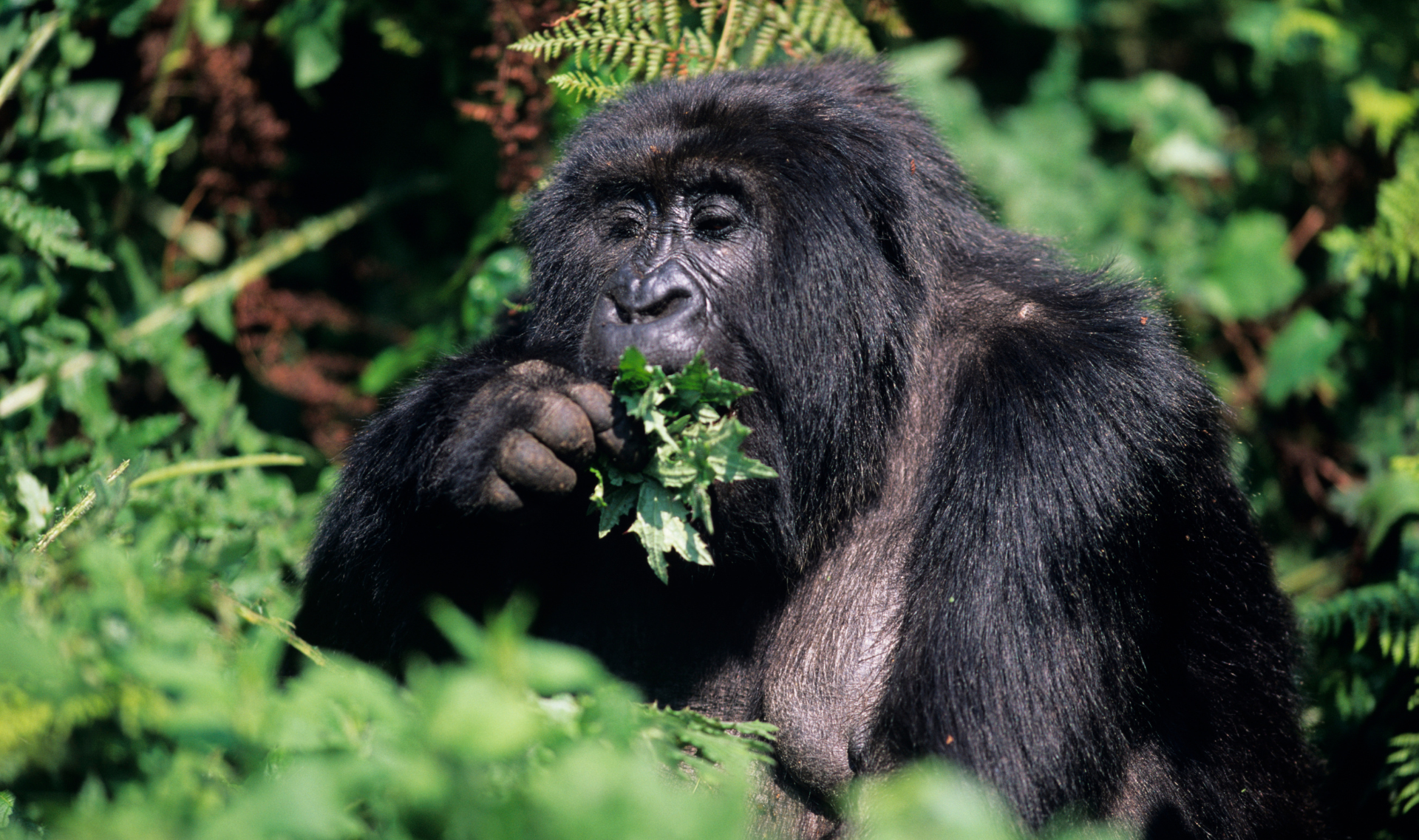
The endangered mountain gorillas are the primary primates in Volcanoes National Park and are often seen during Rwanda gorilla safaris.
Volcanoes National Park protects over 300 mountain gorillas (one third of the world’s remaining mountain gorillas) grouped in around 12 fully habituated mountain gorilla families in their natural habitat, led by a strong silverback.
The major habituated gorilla families in Volcanoes National Park, a vital sanctuary for these endangered species, include
- Amahoro (most peaceful group)
- Susa (on Mount Karisimbi)
- Agashya
- Sabyinyo (most trekked troop), etc.
To see the Rwanda gorillas, tourists need to partake in the gorilla trekking safari activity, which involves guided treks from the park headquarters at 7:00 AM through the dense forests and volcanic slopes, lasting about 30 minutes to several hours, depending on the gorilla family’s location to find the assigned gorilla troop.
The hikes are led by armed rangers and skilled guides who offer intriguing details about their diet, social lives and how they adapt to the alpine environment.
Visitors are able to spend just one hour with the habituated gorilla troop, seeing the endangered animals raise tiny infants, eat, play, groom and forage. It is often viewed as a transforming experience.
To partake in the gorilla tracking activity and see the gentle giants, tourists must obtain a Rwanda gorilla permit from the Rwanda Development Board, which costs USD 1,500 per person and allows for one hour of observation.
The gorilla conservation efforts in Volcanoes National Park over the decades have helped gorilla populations grow, and this success inspires most people worldwide and shows the impact of tourism done right.
Golden Monkeys
The rare golden monkeys are another of the popular primates found in Volcanoes National Park in Rwanda, often seen during Rwanda golden monkey tracking tours.
Golden monkeys are an endangered primate species native to the Virunga area. They are recognized for lively behaviours and their immediately visible brilliant orange and gold fur.
These rare golden monkeys leap through bamboo and trees, munching on fruits, leaves, and other plants, and trekking to view them provides a delightful, less demanding alternative to gorilla visits.
Tourists who participate in the golden monkey tracking activity, which comprises shorter, flatter climbs through the bamboo woods of Volcanoes National Park near the base of Mount Sabyinyo, often see the endangered primates of the golden monkeys.
To partake in golden monkey trekking, you need to have purchased a golden monkey tracking permit, which costs around USD 100 per person from the Rwanda Development Board.
You are allowed to spend only one hour with the habituated troop of golden monkeys, often comprising 80-100 individuals, watching them go about their natural activities, i.e., foraging and interacting playfully with one another.
The monkeys’ golden coats shine in the dense forest light, creating wonderful photo opportunities for all travelers.
Other Primates in Volcanoes National Park
Besides the endangered mountain gorillas and the golden monkeys, other primates in Volcanoes National Park include
- Blue monkeys
- Black and white colobus monkeys
- Red-tailed monkeys
- Vervet monkeys
- Mona monkeys
- Olive baboons, etc.
All these primates in Volcanoes National Park make it a vital sanctuary for wildlife in Rwanda, worth exploring during Rwanda safaris.
Mammals in Volcanoes National Park
Large and small mammals are another of the fascinating wild animals in Volcanoes National Park, worth seeing during Rwanda wildlife safaris.
Some of the popular small and large mammals in Volcanoes National Park include
Forest Elephants
The forest elephants are one of the most popular mammals found in Rwanda’s Volcanoes National Park.
These are smaller, more elusive subspecies of the African savannah elephants that roam the deeper forest areas of the park, which makes sighting them quite hard but rewarding if you are lucky enough to spot them.
Cape Buffaloes
The cape buffalo is one of the most popular mammals found in Volcanoes National Park, Rwanda.
These are large herbivores & grazers primarily found in forest clearings near water sources along the lower slopes of the Virunga volcanoes in this park.
For savannah wildlife viewing beyond Volcanoes National Park, travelers can also visit Akagera park Rwanda.
Giant Forest Hogs
The giant forest hogs are another of the mammals found in Volcano National Park in Rwanda.
These are the largest of the wild suid species, often seen feeding or foraging in the thick undergrowth.
Antelopes
One of the most remarkable mammals in Volcanoes National Park is the antelope.
Volcanoes National Park is home to several of the most prominent antelope species, including the
- Bushbucks: These brown antelope with white stripes and patches are often seen grazing in the borders of forests and clearings.
- Black-Fronted Duikers: These are little antelopes with distinctive thick black stripes down their noses, and they may often be spotted scurrying through the thick foliage.
Bush Pigs
Another mammal species in Volcanoes National Park is the bush pig.
These bush pigs are shy, nocturnal omnivore creatures that are rarely seen yet flourish in the park’s forested settings.
Predators
Volcanoes National Park in Rwanda also hosts predators, including felines, and the most prominent species are the
- Spotted Hyenas: The largest land carnivore species or predators in the park, sometimes observed roaming the lower forested and bamboo slopes.
- Leopards: These are elusive and rare in the park, known for hunting infant mountain gorillas and smaller animals.
- Smaller Carnivores: The park has a thriving number of smaller carnivores such as the slender mongooses, genets, civets, serval cats, golden cats, etc.
Bird Species in Volcanoes National Park
Volcanoes National Park is home to an abundance of bird species found in the best nesting habitats in the park worth seeing during Rwanda birding tours.
Rwanda’s Volcanoes National Park is known for hosting over 200+ species of recorded birds with about 17 endemics, which makes it a birdwatcher’s paradise.
The Rwanda birds in Volcanoes National Park are found in excellent birding hotspots like
- Mount Bisoke
- Mount Karisimbi
- Bamboo zones
- Community trails and park edges
Some of the popular birds often seen by birders include
Endemic Birds

Some of the birds in Volcanoes National Park, considered endemic to the Albertine Rift, found in designated or recognized birding hotspots, include
- Archer’s Ground Robin
- Ruwenzori Turaco
- Dusky Crimsonwing
- Ruwenzori Batis
- Lagden’s Bush Shrike
- Kivu Ground Thrush
- Scarlet Tufted Sunbird
- Strange Weaver, etc.
Most Sought After Birds
Some of the commonly seen or most sought-after birds in Volcano National Park, Rwanda, include
- Rwenzori Double Collared Sunbird
- Handsom Francolin
- White Collared Olive back
- African Goshawk
- Palm Nut Vulture
- Bat Hawk
- Narina Trogon
- African Green Broadbill
- Brown Backed Honeybird, and more
Most of these birds can be spotted as they search for food (insects and fruits) among the trees and ferns, flying near the water, while others nest in protected spots.
Travelers interested in extending their Rwanda forest birding itinerary can also explore Nyungwe forest.
How Best to See the Animals in Rwanda’s Volcanoes National Park?
For you to see the wildlife animals in Volcanoes National Park, Rwanda, you need to partake in several safari activities, such as
- Mountain Gorilla Trekking
- Golden Monkey Tracking
- Birdwatching
- Guided Nature Walks
- Virunga Volcano Hiking, etc. READ MORE!
How To Interact with Animals Safely And Responsibly
Responsible tourism, including recommendations and advice on arranging your vacation to Volcanoes National Park to observe the wild animals
- Book well in advance as they get filled fast
- Employ local guides who will do all the activities for safety and higher possibilities of wildlife sighting
- Remain on marked routes to aid in protecting the delicate habitats and vegetation, and minimize habitat loss
- Maintain a safe distance from the animals and do not feed them.
- Respect bird nesting grounds and other quiet zones
- Remove all rubbish and food wrappers from the park to keep it clean
- Knowledge of the nature animals before your visit will help you to enjoy them more
- If you are sick with any human ailment like colds and flu, do not go gorilla tracking
- Follow all guides’ directions and safety briefings.
By following these recommendations, you help ensure that animals are preserved and conserved for future generations and that you are safe.
Best Time to Visit Volcanoes National Park to See the Animals
Volcanoes National Park is a year-round safari destination in Rwanda that experiences a tropical climate with two dry seasons and two rainy seasons.
The best time to visit Volcanoes National Park to see the animals that live in it is during the dry seasons, which are from June to September and December to February.
The dry months bring brilliant blue skies, good visibility, and drier paths, making hiking and trekking for mountain gorillas and golden monkeys easy and comfortable. However, this time also comes with increased fees on lodges and permits; therefore, it is highly recommended to plan in advance.
If you are on a budget, you might choose to visit the park and see wildlife species during the wet season from March to May and October to November when discounts on lodges are available. But at this time of the year, the trails are muddy and climbs and treks are fairly tough.
Threats Facing the Wildlife Animals in Volcanoes National Park
Volcanoes National Park wildlife faces several threats that put immense pressure on the natural habitats and threaten the species’ survival, such as
- Poaching
- Human disease transmissions
- Habitat loss
- Agricultural encroachment
- Toxic hazards
- Climate change
- Invasive species, etc.
Ongoing Conservation Initiatives Aimed at Protecting the Fauna in Volcanoes National Park Rwanda
Despite the serious challenges facing animals in Volcanoes National Park in Rwanda, the Rwanda Development Board and other dedicated teams work hard t protect them through conservation efforts like
- Population monitoring and research
- Anti-poaching patrols
- Reforestation in areas affected by animal farming of goats and cattle.
- Ecotourism and Permit revenue sharing
- Veterinary interventions, e.g., those led by Gorilla Doctors
- Community engagement through initiatives like the Gorilla Guardians Village (Iby’iwacu)
- Habitat expansion program by the Rwandan government, etc.
Average Safai Costs to Incur on Volcanoes National Park Rwanda Wildlife Safaris For you to observe the wildlife of Volcanoes National Park, you need to pay some conservation and park fees, as well as the activity fees, depending on the season and nationality, such as
| Description | Foreign Non-Residents (USD) | Foreign Residents (USD) | Rwandans/ East African Citizens (USD) |
|---|---|---|---|
| Park Entry Fee | 50 | 50 | 10-20 |
| Gorilla Trekking | 1,500 | 1,500 | 200-500 |
| Golden Monkey Tracking | 60 | 60 | 10-40 |
Other extra fees to incur are porters (USD 10-20 per trek), transport costs (USD 100-1,000 depending on mode), accommodation (USD 50-3,000 per person per day depending on class tier), and more.
Getting To Volcanoes National Park Rwanda
Volcanoes National Park is located in Kinigi, just about an 80 km (2 hours) drive north of Kigali city. Most visitors often fly into Kigali International Airport, and upon arrival, use a private charter/domestic flight or join an organized transfer using 4×4 safari vehicles to reach the Kinigi park headquarters.
Volcanoes National Park Rwanda Accommodation
Travelers visiting Volcanoes National Park to see the wildlife animals can stay in several accommodation options near the park in Musanze or Kinigi for easy access, ranging from budget, midrange, luxury lodges, and guesthouses.
Some of the popular options include One&Only Gorilla’s Nest, Bisate Lodge, Singita Kwitonda Lodge, Five Volcanoes Boutique Hotel, Mountain Gorilla View Lodge, etc.
Rwanda Safari Packing List for Wildlife Tours in Volcano National Park
We strongly encourage tourists visiting Volcanoes National Park to see its wild fauna to pack and carry items like comfortable clothes, sturdy shoes, rain gear, a camera, binoculars, insect repellent, sunscreen, long-sleeved shirts, long pants, and more. READ MORE!
Popular Rwanda Travel Agencies Offering Volcanoes National Park Safaris
- Prime Safaris and Tours Ltd
- Wild Gorilla Safaris
- Gorilla Safari Rwanda
- Rwanda Gorilla Tracking Safaris
- Gorilla Tracking Rwanda
- Africa Safaris Tours
- Gorilla Safaris and Tours
Wildlife in Volcanoes National Park FAQS
1. What Wildlife Is in Volcanoes National Park?
Some of the wildlife you will see in Volcanoes National Park include the endangered primates of the mountain gorillas, golden monkeys, herbivores, predators, bird species, etc.
2. What Other Attractions Can I See in Volcanoes National Park?
Other Rwanda attractions to see in Volcanoes National Park include
- Batwa People
- Unique Flora
- Twin lakes Burera and Ruhondo
- Virunga Volcanoes such as Bisoke, Karisimbi, etc
- Dian Fossey’s Grave and Karisoke Research Center
- Gorilla Guardians Village
- Musanze Caves
- Buhanga Eco Park, and more
For more information about the wildlife of Volcanoes National Park and Rwanda wildlife safari arrangements to see the animals in the park, contact our team of Africa safari experts today!

Over 300 excellent reviews on TripAdvisor
Over 50 excellent reviews on Safaribookings.
Over 50 excellent reviews on Safaribookings.
12+ years of experience.
Best price guarantee.

Robert
Planning a safari and tour? Seek guidance from a safari specialist...
To receive outstanding safari advice, you can either contact us via phone or arrange a video conference with our proficient specialists.