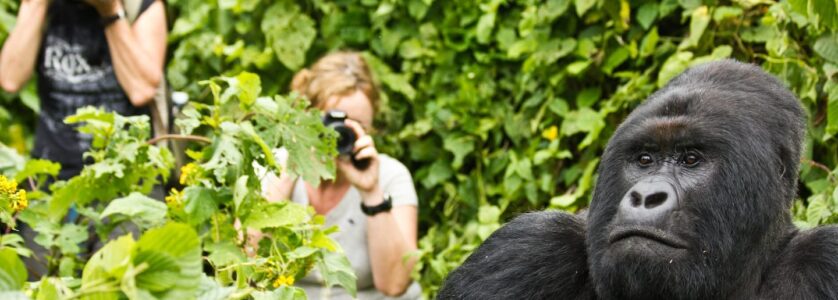
In 2026, the global travel community has shifted its gaze toward deep immersion. It is no longer enough to simply “see” animals; travelers want to understand the ecosystems that sustain them. While the Rwanda gorilla trekking safari remains the pinnacle of primate encounters, it is the diverse uganda safari packages that are capturing the hearts of birdwatchers and dedicated nature lovers this year.
As an expert with over 15 years of experience guiding through the Albertine Rift and the papyrus swamps of the Nile, I’ve watched Uganda transform into Africa’s premier “slow safari” destination. If Rwanda is the “Land of a Thousand Hills,” Uganda is the “Pearl” that holds the continent’s most intricate tapestry of life.
1. Why Uganda is the 2026 Choice for Nature Lovers
While Rwanda offers a focused, high-end experience, uganda safari packages provide a broader geographical playground. Uganda sits at the crossroads of the East African savannah and the West African rainforest. This “overlap” is what creates a paradise for birders and naturalists.
- The Avian Stats: Uganda hosts over 1,000 bird species—more than half of Africa’s total—within a country the size of Great Britain.
- The Nature Diversity: You can move from the snow-capped Rwenzori Mountains to the arid, rugged wilderness of Kidepo Valley in a single journey.
- Expert Insight: In 2026, we are seeing a trend toward “Combined Biodiversity Tours.” Nature lovers are pairing their Bwindi gorilla trek with 4-day birding deep-dives in the Royal Mile or Mabamba Swamp.
2. Top Uganda Safari Packages for Birdwatching
For a birder, Uganda isn’t just a trip; it’s a career milestone. Here are the three most sought-after packages for 2026.
The “Shoebill” Expedition (Entebbe & Murchison)
The prehistoric-looking Shoebill Stork is the “Holy Grail” of African birding.
- The Route: Start at Mabamba Bay Wetland. Navigating these narrow papyrus channels in a traditional dugout canoe as the sun rises is a spiritual experience.
- Extension: Most packages then fly to Murchison Falls, where the Nile Delta provides a second, reliable chance to see this rare giant among a backdrop of elephants and hippos.
The Albertine Rift Endemic Tour (Bwindi)
Bwindi Impenetrable National Park is famous for gorillas, but to a naturalist, its real treasure is the 23 Albertine Rift Endemics.
- Key Species: Look for the African Green Broadbill and the Regal Sunbird.
- The Experience: This trek is vertical and lush. You aren’t just looking for birds; you are walking through a UNESCO World Heritage site that has survived since the last Ice Age.
The “Sempaya” Lowland Loop (Semuliki)
Semuliki National Park is the only place in East Africa where the Congo Basin forest reaches its eastern limit.
- Why it’s special: It’s home to species found nowhere else in the region, such as the Nkulengu Rail and the Congo Serpent Eagle. It feels like a piece of Central Africa was dropped into Uganda.
3. Pairing Primate Magic: The Rwanda-Uganda Combo
A common question I receive is: “Should I do my gorilla trek in Rwanda or Uganda?” In 2026, the most balanced Uganda safari packages actually start in Kigali. By flying into Rwanda, you can enjoy a short drive to see the gorillas in Volcanoes National Park (known for easier tracking and bamboo forests), and then cross into Uganda for a 10-day birding and nature odyssey. This “Best of Both Worlds” approach saves you hours of driving and maximizes your time in the forest.
4. Editorial & Research Policy: Our Expert Guarantee
At Rwanda Gorilla Tracking Safaris, we don’t just sell seats in a van; we sell scientific and ecological expertise.
- Guide Certification: Our birding guides are members of the Uganda Bird Guides Club (UBGC) with specialized training in vocalizations and habitat identification.
- Field-Verified Data: Our 2026 itineraries are updated monthly to reflect changing migratory patterns and road conditions.
- Conservation Integrity: We strictly follow “Leave No Trace” principles. Our packages prioritize eco-lodges that use solar power and support local reforestation.
Frequently Asked Questions
1. Which is better for birding: Murchison Falls or Queen Elizabeth Park?
Both are essential. Queen Elizabeth National Park has a higher species count (over 600), particularly waterbirds and raptors along the Kazinga Channel. Murchison Falls is superior for savannah specials and the elusive Shoebill in the Nile Delta.
2. Is it safe to travel to Uganda’s remote parks like Kidepo in 2026?
Absolutely. Kidepo Valley is now more accessible than ever with daily scheduled flights. It is widely considered the “best wilderness” in Africa because it remains largely untouched by mass tourism.
3. What is the best month for a birdwatching safari in Uganda?
The “Dry Seasons” (December to February and June to August) are best for forest birding and gorilla trekking. However, November and April are peak times for Palearctic and Afro-tropical migrants, making the numbers soar.
4. Do I need specialized equipment for a nature safari?
A high-quality pair of 8×42 binoculars is non-negotiable. For photographers, a 400mm or 600mm lens is recommended for forest species that stay high in the canopy.
5. How much do Uganda safari packages cost in 2026?
Budget-focused birding tours start at approximately $2,800 USD for 7 days, while luxury “Fly-in” nature packages can range from $7,000 to $12,000 USD depending on lodge choice and private guiding.
Your Nature Narrative Begins Here
Uganda is a land that rewards the patient and the curious. Whether you are tracking the Shoebill through the marsh or listening to the morning chorus in Bwindi, you are part of a cycle of life that is as ancient as the rift itself.
Connect with our Nature Specialists:
 >
>