You want more than a fleeting tourist encounter. You fly halfway across the globe, endure punishing overland transit, and hike through tangled rainforests, only to have your ranger announce that your strict 60-minute viewing window has expired. You lower your camera. The adrenaline fades. The moment is over before you fully processed it.
For serious wildlife enthusiasts executing uganda gorilla safaris, the standard one-hour trek often feels abruptly short. You spend 45 minutes wrestling with your camera settings and 15 minutes actually looking at the primate in front of you.
The antidote to this rushed timeline is the Gorilla Habituation Experience (GHEX). Costing $1,500, the exact same price as a standard 1-hour permit in neighboring Rwanda, this specialized permit grants you four intense hours with a semi-wild gorilla family.
But four hours in Bwindi Impenetrable National Park is not simply an extended photo op. It is a grueling, unpredictable scientific process. If you are vetting Uganda gorilla tours and considering the habituation upgrade, you must understand the psychological and physical toll of tracking primates that haven’t yet learned to tolerate your presence.
What Exactly is Gorilla Habituation?
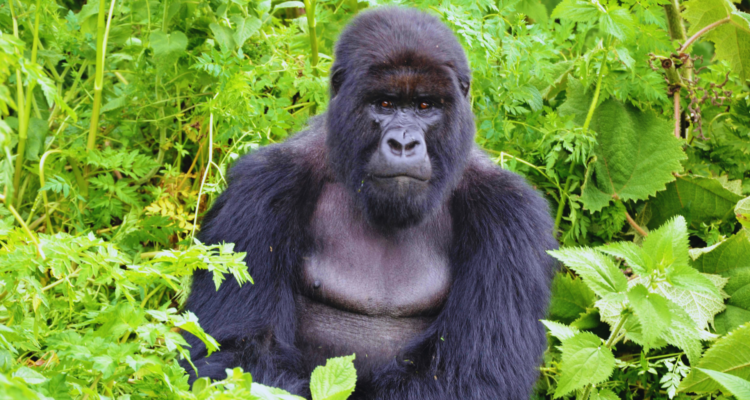
Mountain gorillas are not born ignoring humans. When researchers first approach a wild silverback, the primate’s instinct is to charge or flee. “Habituation” is the painstakingly slow, two-to-three-year process of desensitizing a wild troop to human observers.
When you purchase a habituation permit, you aren’t joining a standard tourist tracking group. You are joining researchers, conservationists, and armed rangers as they perform their daily behavioral conditioning. You become an active participant in the scientific pipeline.
The Psychological Reality of Semi-Wild Primates
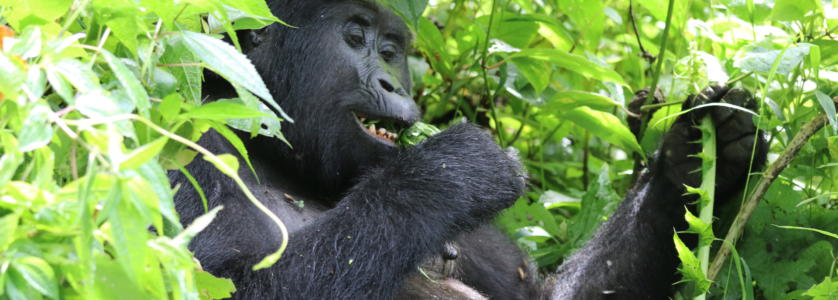
Standard treks visit fully habituated families. Those gorillas view humans as benign, uninteresting scenery. They sleep, groom, and eat right in front of you.
Habituation groups operate on a different psychological frequency.
- The Stalk and Flee: Semi-habituated gorillas are acutely aware of your presence. They are skittish. You will often spend the first hour simply watching shadows dart behind mahogany trees.
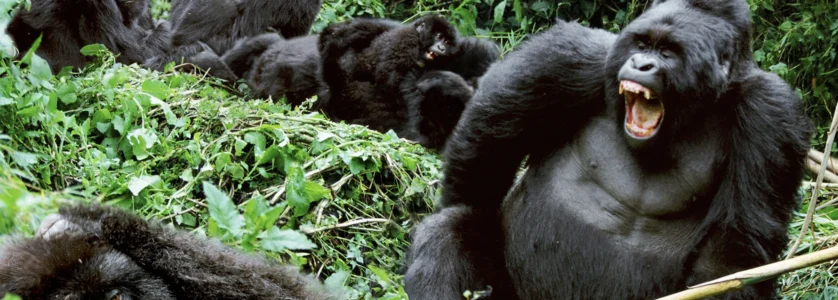
- The “Mock Charge” Factor: Because the silverback is still deciding if you are a threat, aggression displays are highly common. You will likely experience a 400-pound silverback beating his chest, tearing down foliage, and bluff-charging the research team. You must hold your ground. The psychological intensity of this proximity is staggering.
- The Shift from Observer to Scientist: You will not just take photos. The researchers will ask you to help collect data. You will observe nesting habits, identify unique facial structures to help name infants, and document vocalizations.
The Physical Demands: Surviving Bwindi’s “Impenetrable” Depths
Do not underestimate the terrain. On premium gorilla safaris in Uganda Africa, operators often match standard trekkers with gorilla families located near the trailheads. Habituation groups offer no such luxury.
These gorillas are often deeper in the forest, residing on steeper, more hostile gradients. Furthermore, because they are not fully relaxed, they move rapidly.
- The Pursuit: Fully habituated gorillas sit still in clearings. Semi-habituated gorillas retreat into thickets. You will be bushwhacking for four hours straight, climbing 60-degree mud ravines while attempting to keep pace with a troop that navigates the jungle effortlessly.
- The Elements: Four hours of observation means you are highly exposed to Bwindi’s volatile microclimate. You will likely endure blistering equatorial heat followed by a torrential, temperature-dropping downpour.
- The Static Burn: When the gorillas finally stop, you must freeze. Crouching in stinging nettles on a muddy incline for 45 minutes while a silverback evaluates you requires immense core strength and lactic acid tolerance.
The Matrix: Standard Trekking vs. Habituation Experience
To calculate your personal ROI, weigh the parameters of both options.
| Operational Metric | Standard Gorilla Trekking | Gorilla Habituation Experience (GHEX) |
| Time with Gorillas | 1 Hour strict maximum | 4 Hours (Excluding hike time) |
| Permit Cost (USD) | $800 | $1,500 |
| Group Size Limit | 8 Tourists | 4 Tourists (Maximum exclusivity) |
| Primate Behavior | Sedentary, relaxed, ignoring humans. | Active, unpredictable, curious, or defensive. |
| Physical Intensity | Moderate to High | Extreme (Requires sustained endurance) |
| Photographic Yield | High (Clean shots, static subjects) | Variable (Action shots, heavy foliage, rapid movement) |
Strategic Logistics for the Habituation Upgrade
If you determine that four hours in the mud is worth the investment, your logistical window is remarkably narrow.
1. The Sector Monopoly
The Uganda Wildlife Authority (UWA) only conducts the habituation experience in one highly specific region: the Rushaga Sector in the southern region of Bwindi. You cannot do this in Buhoma or Ruhija. Your accommodation must be booked specifically in Rushaga or nearby Nkuringo to avoid a dangerous 3:00 AM transit on mountain roads.
2. The Inventory Crisis
Standard permits allow eight people per family across dozens of families. Habituation permits are strictly capped at four tourists per day, across only one or two families. That equals a maximum of eight permits available nationwide per day. You must secure this permit 8 to 12 months in advance.
3. Camera Gear for the Long Haul
Four hours destroys battery life. The canopy is dark, and the gorillas move fast.
- Leave the tripod at the lodge; you will not have the time or the flat ground to deploy it.
- Bring a fast lens (f/2.8 is ideal) to handle the low light without pushing your ISO into a grainy mess.
- Pack industrial-grade dry bags. Four hours guarantees you will encounter heavy moisture, either from rain or the sheer humidity of the undergrowth.
Frequently Asked Questions
Is the Gorilla Habituation Experience safe?
Yes. Despite the unpredictable nature of semi-wild gorillas, you are flanked by elite UWA rangers and seasoned researchers who have studied primate behavioral psychology for decades. They know precisely how to de-escalate a tense encounter.
Are gorilla safaris in Uganda Africa ethical?
Highly ethical. The $1,500 permit fee is the financial lifeblood of Bwindi’s conservation efforts. This revenue pays for anti-poaching patrols, veterinary care (Gorilla Doctors), and community infrastructure. Without the economic incentive of tourism, the mountain gorilla population would likely face rapid extinction from habitat loss.
Is the 4-hour clock strictly enforced?
The clock begins the moment you make visual contact with the gorillas. It ends exactly four hours later. However, if the gorillas become highly agitated or exhibit signs of extreme stress, the lead researcher retains the absolute authority to terminate the encounter early to protect the troop.
Do I need a porter for the habituation trek?
It is not just recommended; it is a tactical necessity. For $20, a local porter carries your heavy gear and provides a physical anchor on the slick ravines. Over a 6-to-8-hour round trip, conserving your upper body energy for wielding your camera is paramount.
 >
>